Skip to content

Table of Contents
Acne scars can remain long after active breakouts have settled, and their appearance can vary considerably from one person to another. Some leave shallow depressions or uneven texture, while others are accompanied by lingering discoloration. Because these changes occur at different depths within the skin, choosing an acne scar treatment involves more than simply selecting a popular procedure.
Can acne scars be completely removed?
Acne scars may not always disappear completely, but appropriate treatment can reduce their visibility and improve skin texture over time.
Why Acne Scars Need Different Treatment Approaches
Acne can affect the skin in several ways. When inflammation damages tissue beneath a breakout, the healing process may not restore the area to its previous texture. Too little collagen can contribute to depressed scars, while excess pigment after inflammation can leave red, brown, or darker marks.
This distinction matters because acne scar removal is not a single process. A treatment that helps uneven texture may work differently from one intended to improve discoloration or congestion. Deep scars may also respond differently than mild surface irregularities.
A consultation gives a provider the opportunity to examine these characteristics instead of treating every acne scar the same way. Active breakouts may need to be addressed alongside scarring so that treatment supports both current skin concerns and longer-term improvement.
5 Acne Scar Treatments to Consider
Several procedures can play a role in improving acne-prone or scarred skin. The following five options address different concerns and may be used individually or as part of a broader treatment plan.
1. SkinPen Microneedling
SkinPen creates controlled microchannels in the skin that stimulate its natural repair response and collagen production. This makes microneedling for acne scars particularly relevant for people with depressed scars and uneven texture.
As new collagen develops over time, treated areas may gradually become smoother and more even in appearance. Results are progressive rather than immediate, and multiple sessions may be recommended depending on scar depth and individual response.
2. CoolPeel
CoolPeel is a fractional CO2 laser treatment designed to resurface targeted areas of the skin while limiting unnecessary heat exposure to surrounding tissue. As a laser acne scar treatment, it can be considered for textural irregularities, enlarged-looking pores, and other surface changes associated with previous acne.
Laser resurfacing works by creating controlled treatment zones that encourage renewal and collagen remodeling. Treatment intensity and the number of sessions needed depend on the skin and the concerns being addressed.
3. BioRePeel
BioRePeel is a chemical peel formulated to support skin renewal while addressing concerns such as uneven tone, texture, congestion, and acne-related changes. A chemical peel for acne scars works primarily at the skin’s surface, making proper peel selection important when scars vary in depth.
BioRePeel may be considered when someone wants to improve overall skin quality alongside mild post-acne texture or discoloration. A provider can determine how frequently it should be performed based on skin tolerance and treatment goals.
4. VI Peel
VI Peel is another chemical peel option that can be used for acne-prone skin, discoloration, and visible signs left behind by breakouts. By encouraging the shedding of damaged surface cells and subsequent skin renewal, the peel may help create a more even-looking complexion.
Peels can vary in strength and formulation, so professional assessment is especially important for people who are prone to pigmentation changes or have sensitive skin.
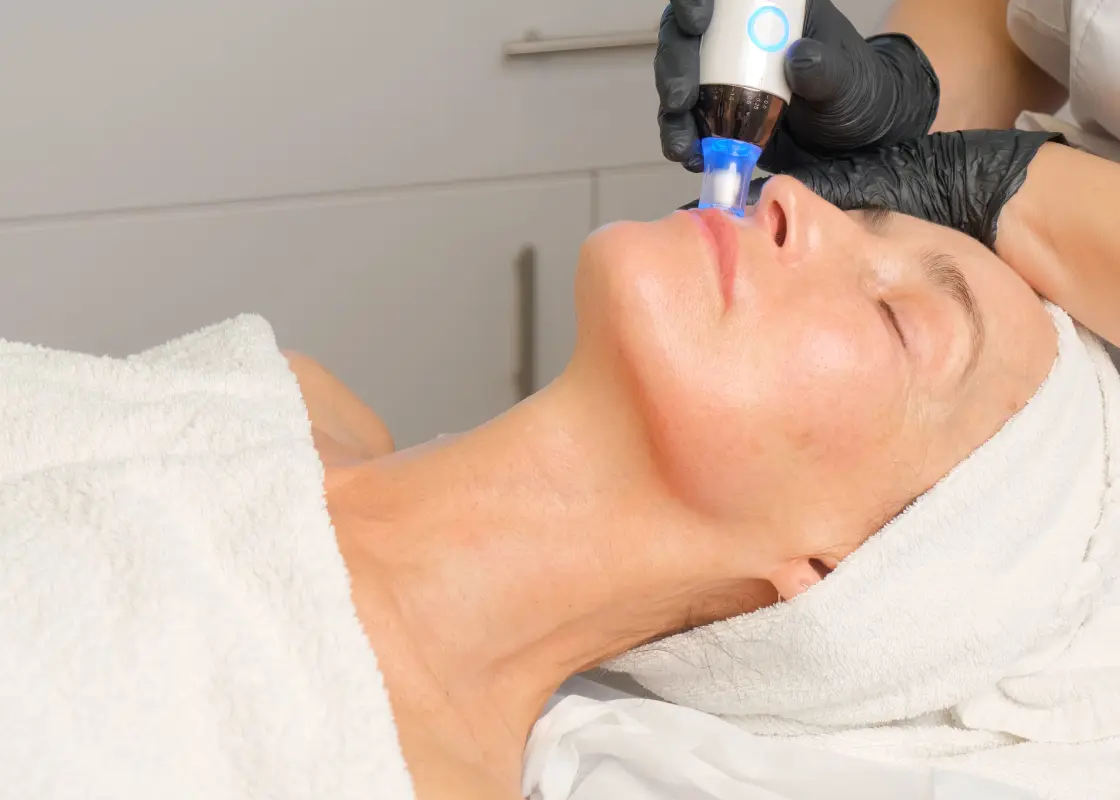
5. HydraFacial
HydraFacial takes a different approach from procedures intended to remodel deeper acne scars. It combines cleansing, exfoliation, extraction, and hydration to address congestion and support the overall condition of the skin.
For someone who continues to experience clogged pores or breakouts, HydraFacial may complement a broader acne program. It is not intended to replace procedures used for deeper scars, but improving congestion and maintaining healthier-looking skin can be useful while other treatments focus on texture or discoloration.
Microneedling, Laser Treatment, or Chemical Peels?
Choosing among these treatments starts with identifying the primary concern.
Microneedling focuses on controlled collagen stimulation and can be useful for certain depressed or textural scars. CoolPeel combines resurfacing with collagen remodeling, giving providers another option for visible texture concerns. Chemical peels such as BioRePeel and VI Peel work more heavily at the surface and may be appropriate when discoloration, mild texture, or acne-prone skin is part of the concern.
These treatments do not need to compete for the role of a single “best” procedure. Different methods can address different layers or characteristics of the skin. A treatment plan may therefore involve more than one modality over time, provided the timing and combination are appropriate for the individual.
Can HydraFacial Help When You Have Acne Scars?
HydraFacial is better viewed as a supportive acne treatment than as a direct solution for deeper scars. Its cleansing and extraction steps can help manage pore congestion, while exfoliation removes accumulated surface debris and hydration supports the skin barrier.
This distinction is important for setting realistic expectations. Someone seeking improvement in indented scars may need a collagen-stimulating or resurfacing procedure, while a person dealing with active congestion and mild post-acne changes may benefit from incorporating HydraFacial into a broader plan.
What to Expect From Acne Scar Treatment
Acne scar improvement usually develops gradually. Collagen-stimulating treatments require time for the skin’s repair processes to occur, while chemical peels involve a period of surface renewal. The experience and recovery period can therefore differ significantly between procedures.
Skin type also influences treatment planning. Providers consider factors such as pigmentation, sensitivity, acne activity, previous procedures, medications, and the tendency to develop dark marks after inflammation.
Meridian Medical Spa: Acne Scar Treatment and Removal in Bonita Springs
Meridian Medical Spa offers acne scar treatment in Bonita Springs through a comprehensive acne program that can incorporate HydraFacial, SkinPen, CoolPeel, BioRePeel, and VI Peel. Treatment plans are customized according to specific skin concerns rather than relying on the same procedure for every patient.
For people researching acne scar removal in Bonita Springs, the treatment process can begin with an assessment of active acne, scar characteristics, skin texture, and discoloration. HydraFacial may be incorporated for deeper cleansing and congestion, while a chemical peel may be recommended to address certain post-acne marks or surface irregularities. SkinPen and CoolPeel provide additional options when texture and collagen remodeling are priorities.
Ready to reduce the appearance of acne scars and restore smoother, healthier-looking skin? Schedule a consultation with the experienced team at Meridian Medical Spa in Bonita Springs
Frequently Asked Questions
How many SkinPen treatments are needed for acne scars?
The number of SkinPen sessions varies according to scar depth, skin condition, treatment goals, and how the skin responds to each procedure.
Is CoolPeel suitable for acne scars?
CoolPeel may be recommended for certain acne scars and textural concerns after a provider evaluates the patient’s skin type and scar characteristics.
Can chemical peels help with old acne scars?
Chemical peels may improve discoloration and some superficial post-acne irregularities, although deeper scars often require treatments that target collagen and deeper tissue.